
Glass half full for 2027?
Summary
Equity markets have had a setback, especially in artificial intelligence (AI)-related stocks, after worries about inflation and negative headlines about a leading US technology company. The wider economy has stayed resilient, however. US growth is forecast at around 2.3% in both 2026 and 2027, and global growth forecasts have risen despite high oil prices since the conflict with Iran began in March 2026. Higher energy costs have added about one percentage point to inflation forecasts in the US, UK and eurozone, and the Bank of England expects UK inflation of around 5% in 2027.
Central banks have raised interest rates through 2026, and markets expect about another 0.75 percentage points of increases in the UK and US by mid-2027. That is a reversal from the start of the year, when rate cuts were expected. Bond yields have risen as a result: the yields on 2-year US government bonds went from about 3.5% to nearly 5% since the start of attacks on Iran in February. US bond yields have risen more than those elsewhere, which has strengthened the US dollar, while the euro has weakened because energy costs weigh more heavily on Europe.
The outlook for 2027 is cautiously positive. Elections in Israel and the US have lowered the risk of military escalation with Iran, and Gulf oil supply has picked up. Together, these have cut oil prices by about $20 per barrel since the end of October. Interest rates are still expected to rise in the first half of 2027, but if oil keeps falling, inflation could come in below forecast towards the end of 2027.
Corporate profits have been stronger than expected in 2026, helped by growth and wider profit margins. US earnings have been led by the large technology companies, emerging markets have benefitted from AI investment, and the UK has seen steady gains. Unlike the 1999 technology bubble, valuations today are lower and profit forecasts are rising rather than falling. With equity prices down and profits up, valuations have fallen, which could offer an attractive starting point for investors if the more optimistic view of 2027 proves right.
Despite it all, all is well
Headlines about inflationary angst, and governance issues at Nvidia caused a setback in equities, particularly those within the AI ecosystem. The economic backdrop, however, remains one of resilient growth, even though inflation rose in early autumn on the back of higher oil prices.
Economists forecast US economic growth of around 2.3% year on year in 2026, and the same again in 2027. Although other regions, including the UK, are expected to grow more slowly than the US, growth forecasts around the world have risen in recent months, despite the elevated oil prices seen since the start of the military conflict with Iran in March 2026.
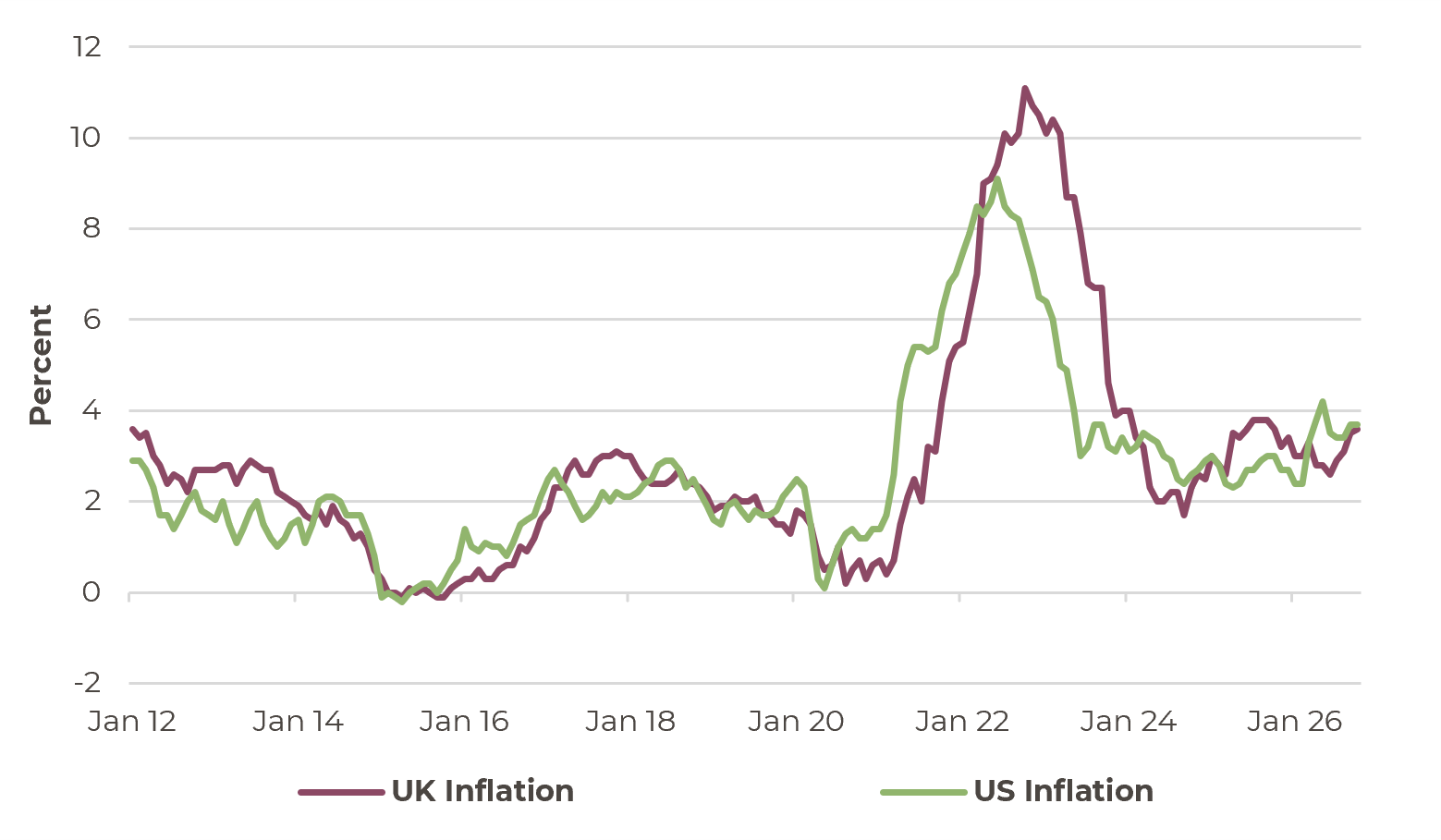
The rise in oil prices through 2026 has pushed up inflation forecasts in the US, the UK and the eurozone by one percentage point since the start of the year. In the UK, the Bank of England expects the recent surge in energy costs, both oil and gas, to result in inflation of around 5% in 2027.
Higher oil prices and stronger economic growth have prompted central banks to raise interest rates through 2026, and investors expect rates to rise further in 2027. In both the UK and the US, markets are pricing in a further 0.75 percentage points of interest rate increases by the middle of 2027. This contrasts with expectations at the beginning of the year, when investors anticipated that interest rates would fall through 2026 and 2027.
The rise in energy prices caused by the Iranian conflict has pushed inflation higher in recent months
Source: Bloomberg, Artorius
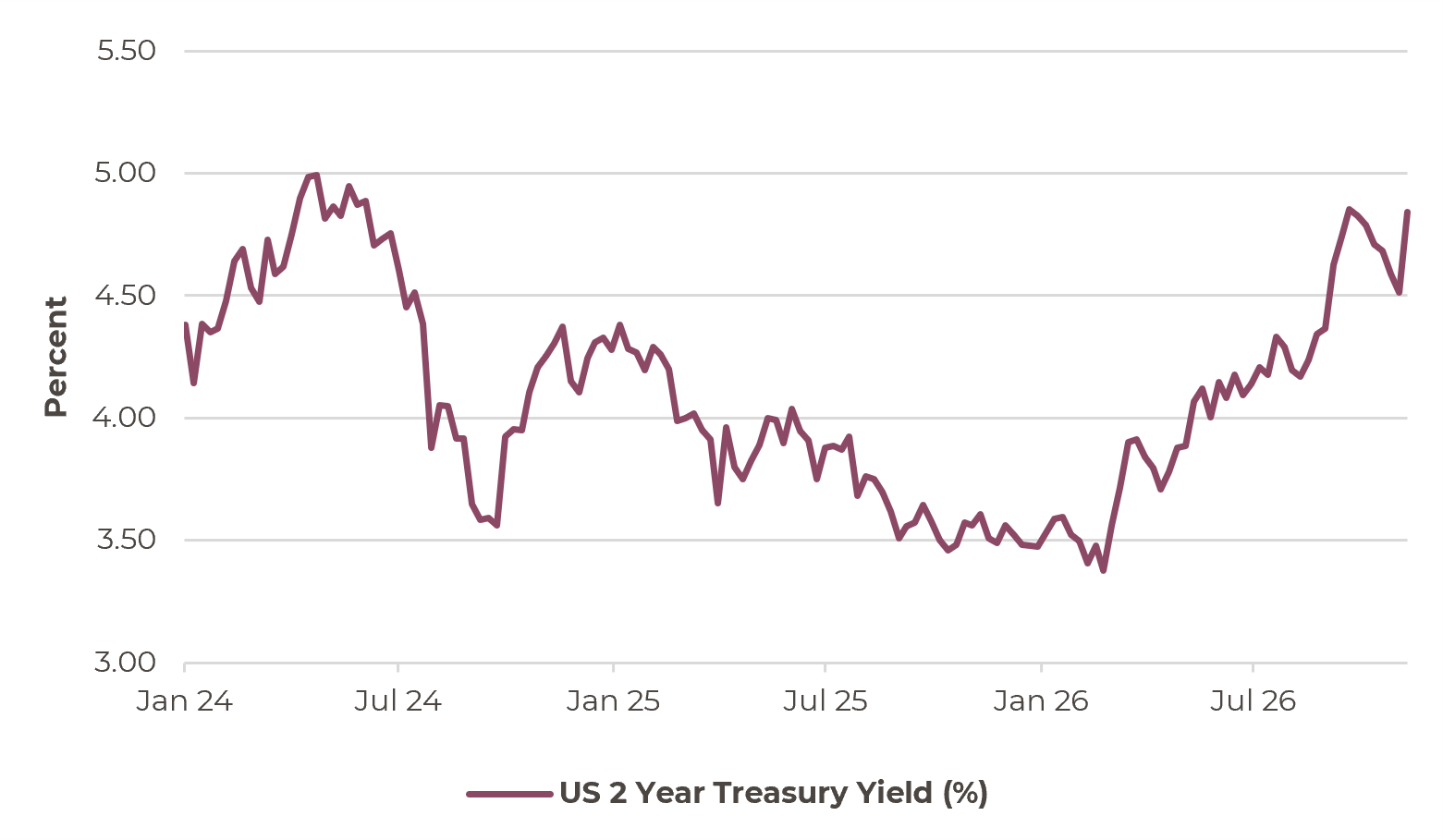
Expectations of higher interest rates have pushed bond yields up over the past eight months. US 2-year government bond yields have risen from 3.5% to nearly 5%, and the UK has seen a similar rise in government bond yields since the attacks on Iran. Higher interest rates are putting pressure on some parts of the global economy, such as housing markets, and on governments seeking to finance ongoing deficits. Even so, given the energy price shock and the disruption to energy supplies, economic growth around the world has held up better than expected in 2026.
Nominal economic growth has returned to rates last seen before the 2007 financial crisis, helping push US 10-year bond yields back to ‘old’ normal levels
Source: Bloomberg, Artorius
Dollar, oh Bond
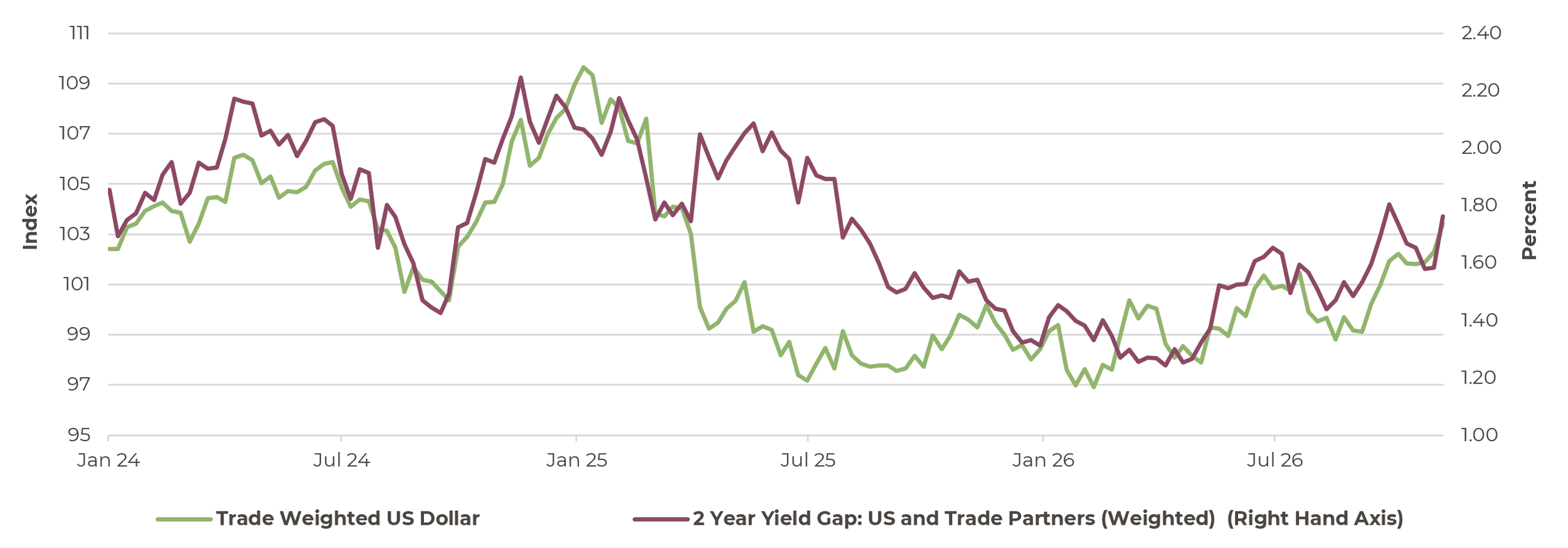
Bond yields have risen around the world (with an exception being China, where yields reflect a weakening domestic economy), but US yields have risen more than those elsewhere. These higher yields have helped to strengthen the US dollar through 2026. The euro has been notably weak against the dollar, as the burden of energy costs weighs more heavily on the eurozone economy than on the US.
The US Dollar on a trade weighted measure (the value of the US dollar against a basket of foreign currencies, weighted by each country's importance in US trade) has risen by 6 % since the start of the Iranian war.
US bond yields have risen by more than those of other countries, lifting the US dollar
Source: Bloomberg, Artorius
Glass half-full for 2027
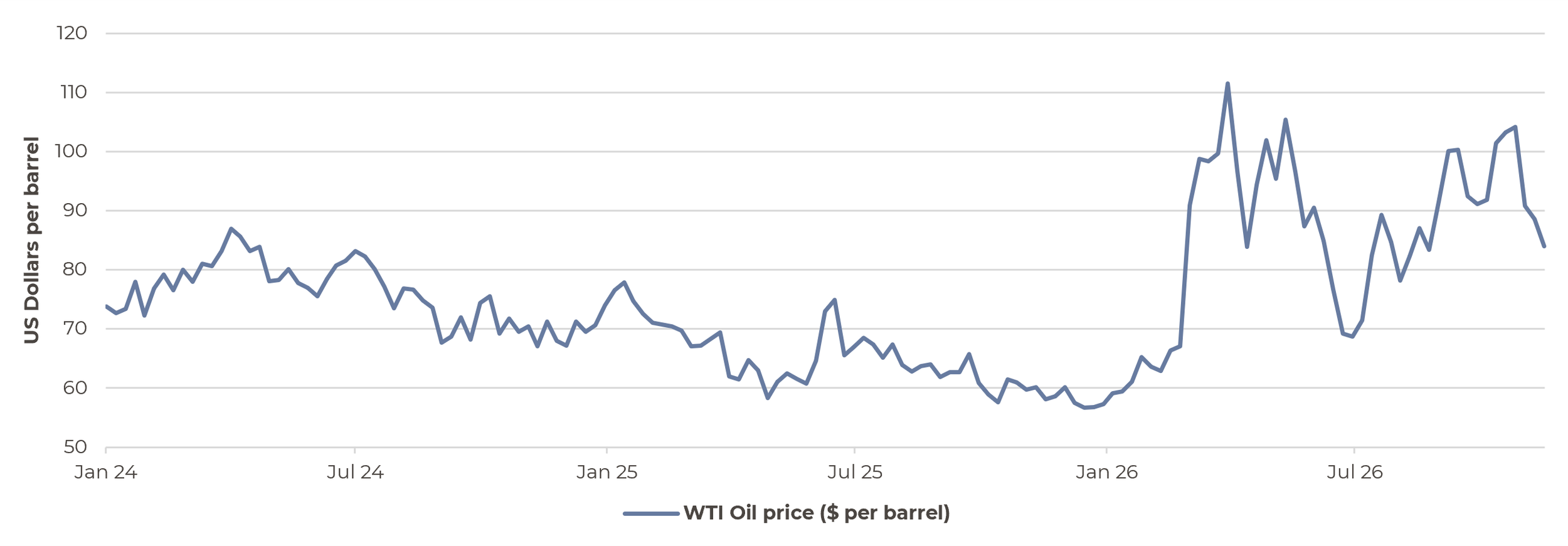
2026 has been a challenging year, with oil prices rising from $55 a barrel in January to over $100 following the attacks on Iran. Over the past month, however, both Israel and the US have held elections. In Israel, a change of Prime Minister looks likely, although the complexities of Israel’s proportional representation system mean it may be some time before it is confirmed that Gadi Eisenkot will replace Benjamin Netanyahu.
In the US, the Democrats gained a majority in both the House of Representatives and the Senate. The political changes in Israel and the US have reduced the chances of a military escalation with Iran. Together with an increase in oil supply from the Gulf, this has led to a $20 fall in oil prices since the end of October, which should ease inflationary pressures in 2027. With inflation above central banks’ comfort levels, interest rates are still expected to rise in the first half of 2027. However, if oil prices fall further, the glass-half-full view for 2027 is one in which inflation comes in lower than forecast.
Oil prices (as measured by West Texas Intermediate prices – WTI) have fallen since the end of October, reflecting political changes and a faster-than-expected recovery in oil supply
Source: Bloomberg, Artorius
Corporate profits
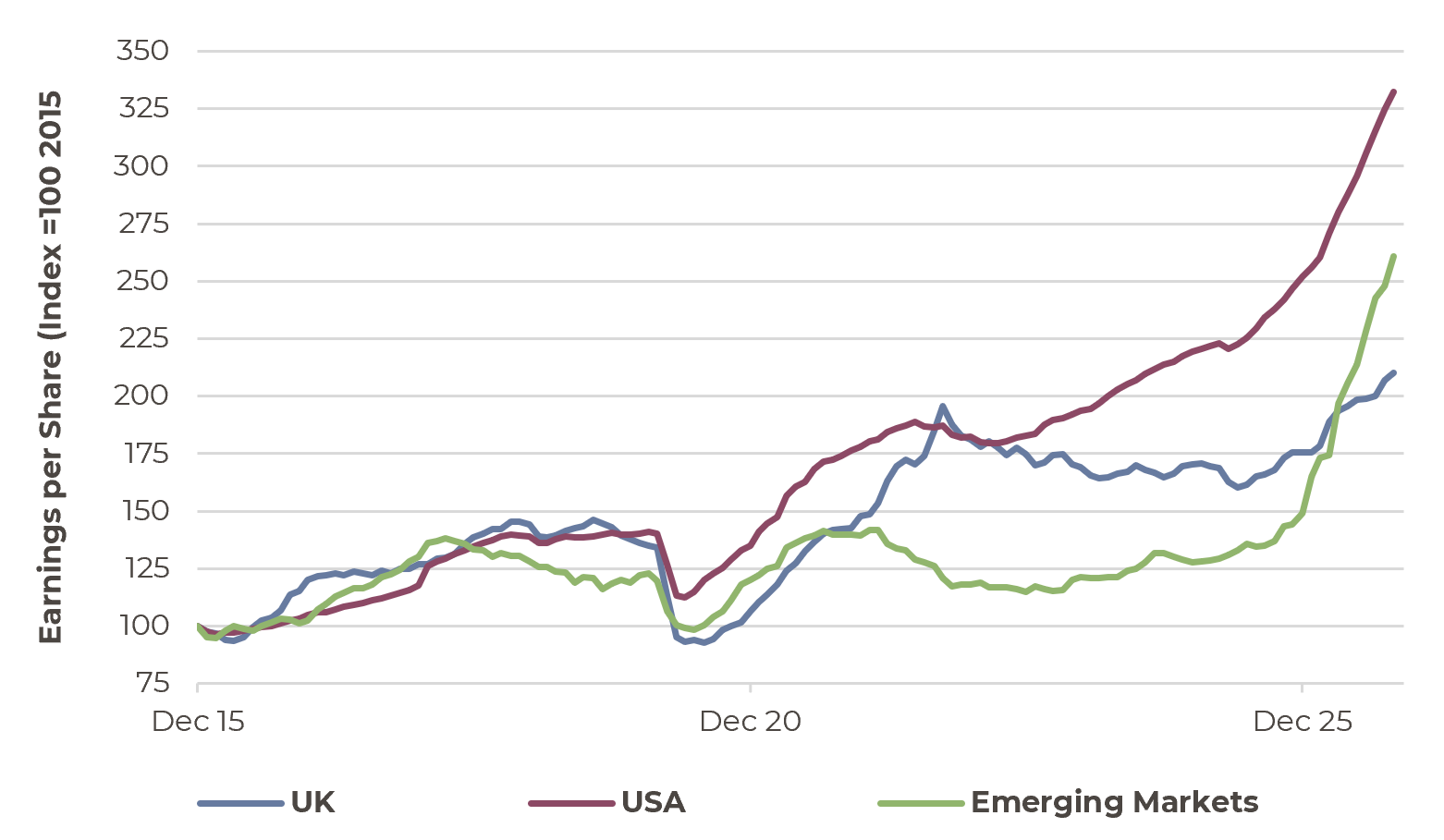
Despite rising interest rates, equity markets have been resilient in 2026. Company profits have grown more strongly than expected, helped both by stronger-than-expected economic growth and by an expansion in profit margins.
US profits have grown robustly for over a decade, driven by the established technology giants, while emerging market companies have benefitted from the AI capital expenditure (spending on infrastructure and equipment) cycle. Even in the UK, profits have grown steadily over the past two years.
Corporate profits, as reflected in earnings per share, have been strong globally in 2026
Source: Bloomberg, Artorius
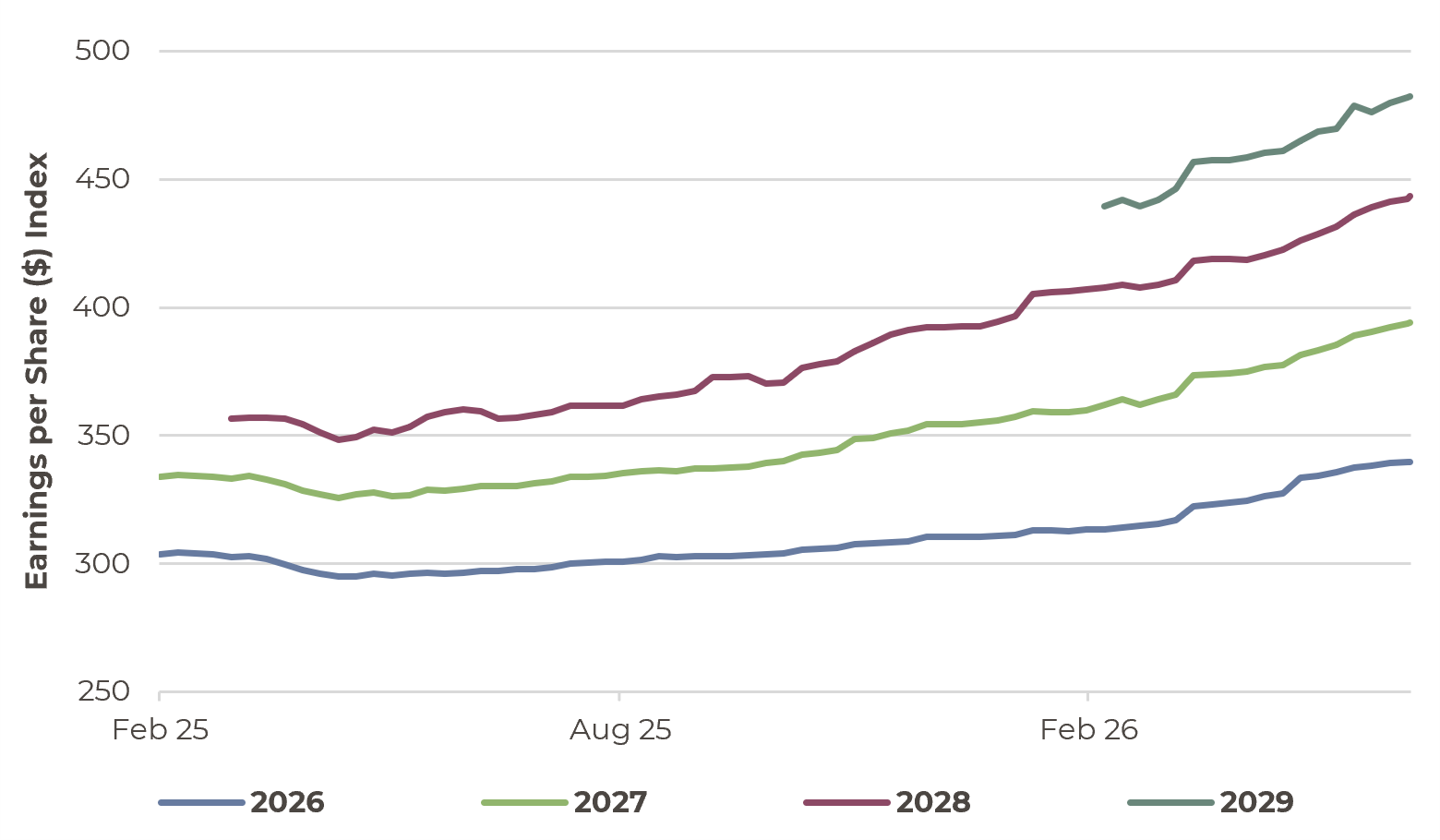
Profits are expected to keep rising in the coming years, as the chart below shows using earnings-per-share forecasts for 2026 and beyond. Although the pace of growth is expected to slow, earnings should continue to grow. Indeed, the upward slope of each line shows that, over time, analysts have become increasingly optimistic about the profits of the companies in the S&P 500 index (the leading index of large US companies).
S&P 500 earnings per share forecasts for calendar years 2026–2029: profits are expected to remain strong
Source: Bloomberg, Artorius
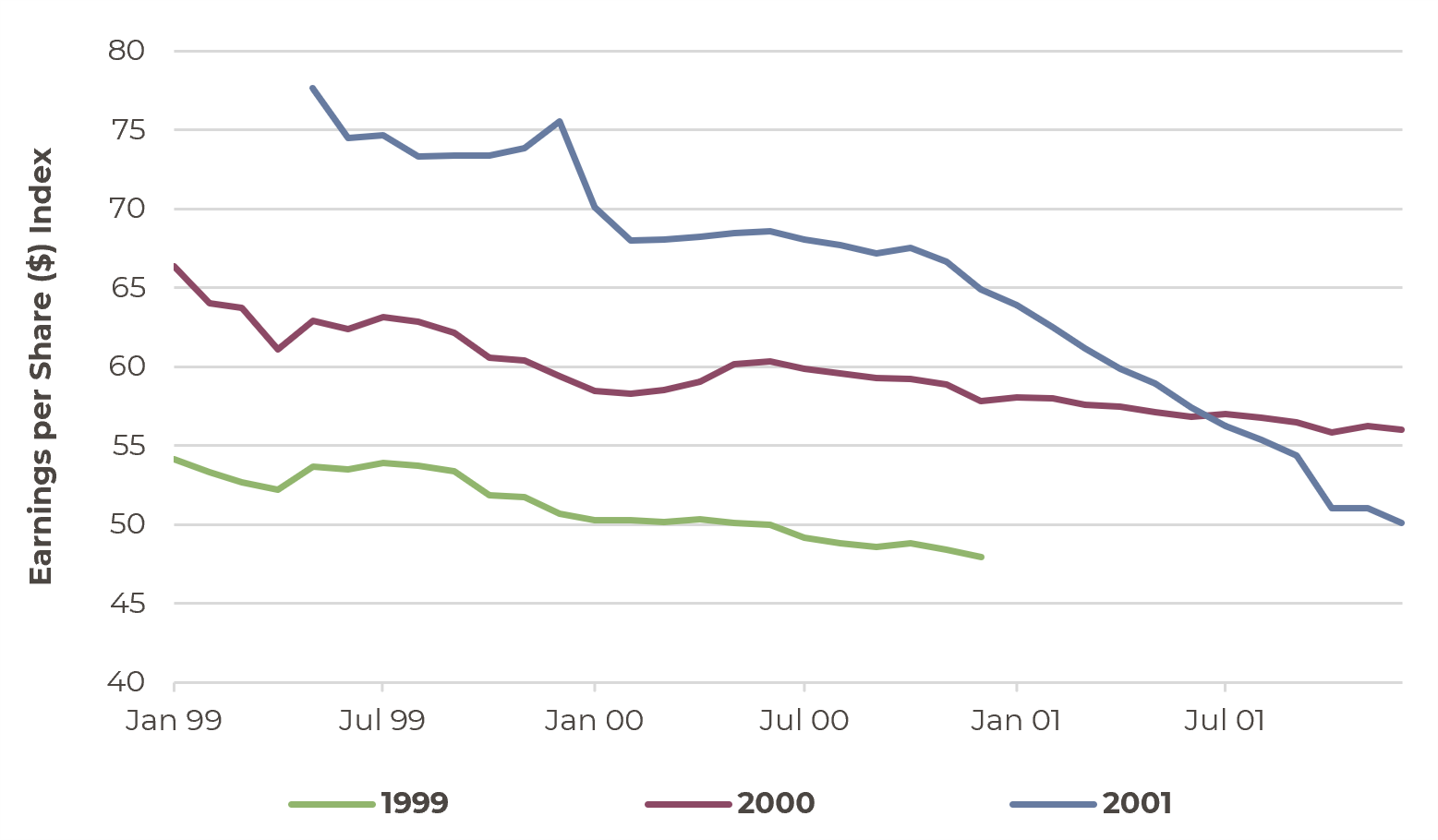
The technological advances in AI and some recent stock market behaviour invite easy comparisons with the technology bubble of the late 1990s. The stark difference is that, during the 1999 bubble, valuations were higher than they are today, and profit expectations were falling rather than rising as they are now.
S&P 500 earnings per share forecasts for calendar years 1999–2001: profit expectations fell during the technology bubble
Source: Bloomberg, Artorius
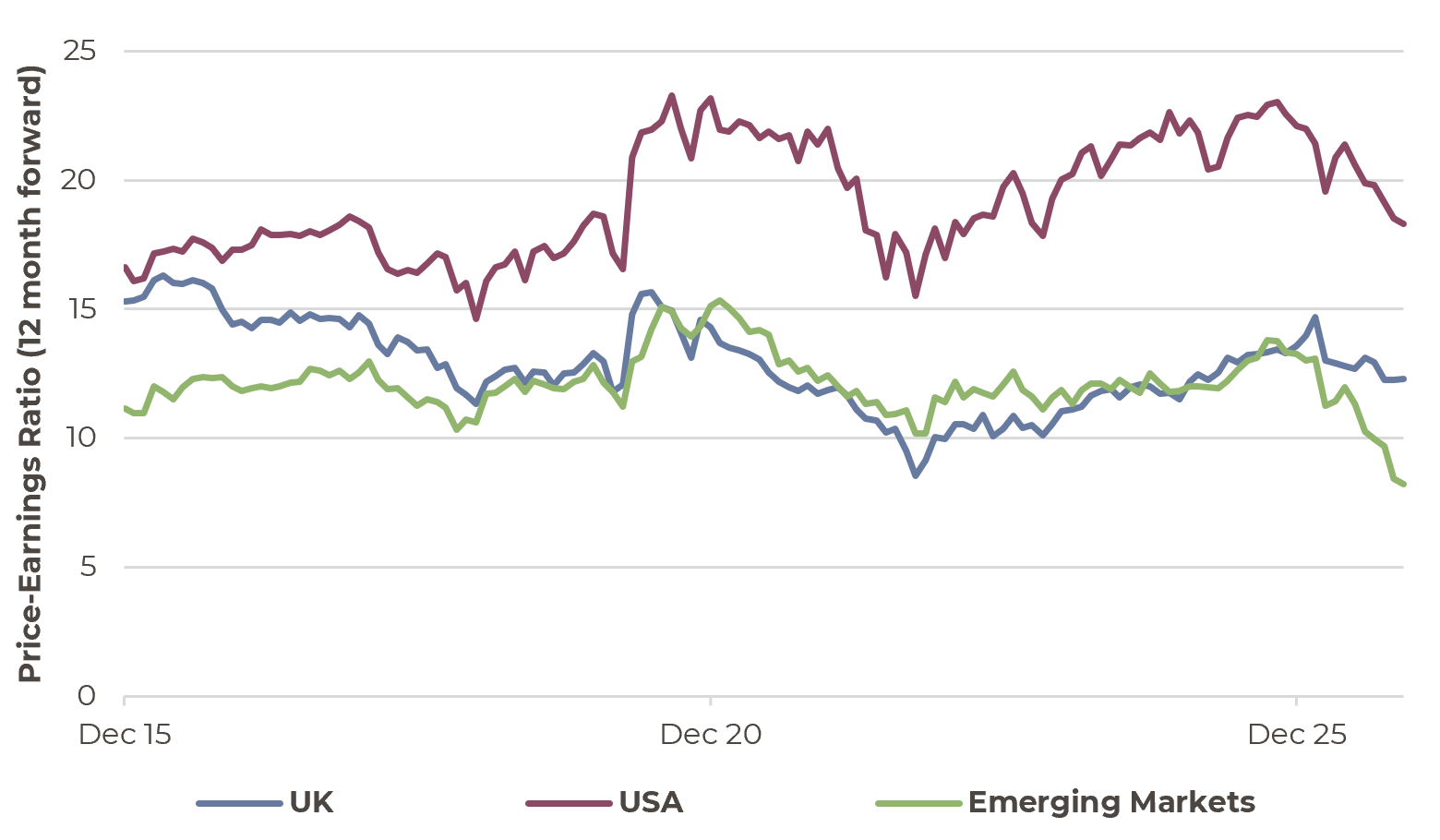
The strong rise in profits, combined with the recent decline in equity markets, has brought equity valuations down.
Equity valuations (12-month forward price-to-earnings ratios) have fallen recently
Source: Bloomberg, Artorius
If the glass-half-full view of 2027 proves correct, with falling oil prices easing inflationary pressures and interest rates stabilising, investors may come to see today’s lower valuations as an attractive starting point for future returns.
Conclusion

Equity markets have had a setback, especially in artificial intelligence (AI)-related stocks, after worries about inflation and negative headlines about a leading US technology company. The wider economy has stayed resilient, however. US growth is forecast at around 2.3% in both 2026 and 2027, and global growth forecasts have risen despite high oil prices since the conflict with Iran began in March 2026. Higher energy costs have added about one percentage point to inflation forecasts in the US, UK and eurozone, and the Bank of England expects UK inflation of around 5% in 2027.
Central banks have raised interest rates through 2026, and markets expect about another 0.75 percentage points of increases in the UK and US by mid-2027. That is a reversal from the start of the year, when rate cuts were expected. Bond yields have risen as a result: the yields on 2-year US government bonds went from about 3.5% to nearly 5% since the start of attacks on Iran in February. US bond yields have risen more than those elsewhere, which has strengthened the US dollar, while the euro has weakened because energy costs weigh more heavily on Europe.
The outlook for 2027 is cautiously positive. Elections in Israel and the US have lowered the risk of military escalation with Iran, and Gulf oil supply has picked up. Together, these have cut oil prices by about $20 per barrel since the end of October. Interest rates are still expected to rise in the first half of 2027, but if oil keeps falling, inflation could come in below forecast towards the end of 2027.
Corporate profits have been stronger than expected in 2026, helped by growth and wider profit margins. US earnings have been led by the large technology companies, emerging markets have benefited from AI investment, and the UK has seen steady gains. Unlike the 1999 technology bubble, valuations today are lower and profit forecasts are rising rather than falling. With equity prices down and profits up, valuations have fallen, which could offer an attractive starting point for investors if the more optimistic view of 2027 proves right.
*Any feedback provided can be anonymous
Important Information
Artorius provides this document in good faith and for information purposes only. All expressions of opinion reflect the judgment of Artorius at 20th November 2026 and are subject to change, without notice. Information has been obtained from sources considered reliable, but we do not guarantee that the foregoing report is accurate or complete; we do not accept any liability for any errors or omissions, nor for any actions taken based on its content.
The value of an investment and the income from it could go down as well as up. The return at the end of the investment period is not guaranteed and you may get back less than you originally invested. Past performance is not a reliable indicator of future results.
Nothing in this document is intended to be, or should be construed as, regulated advice. Reliance should not be placed on the information contained within this document when taking individual investment or strategic decisions.
Any advisory services we provide will be subject to a formal Engagement Letter signed by both parties. Any Investment Management services we provide will be subject to a formal Investment Management Agreement, which will include an agreed mandate.
Artorius Wealth Management Limited is authorised and regulated by the Financial Conduct Authority. Artorius is a trading name of Artorius Wealth Management Limited.
FP20261120001