
Interest is rising
Interest is rising
Summary
The escalating conflict with Iran has pushed oil prices above $100 per barrel and raised inflation expectations, prompting markets to reassess both the inflation outlook and the likely path of interest rates. This has resulted in a backdrop where equities have struggled over the past few months despite strong profits growth.
The European Central Bank raised rates twice over the summer, and the US Federal Reserve raised rates on September 16th. Both banks had previously been expected to cut rates in 2026, but the US-Israeli strikes on Iran and the resulting rise in oil prices reversed those expectations. This shift has pushed bond yields higher. Higher yields make borrowing more expensive for governments and companies and, historically, result in slower economic growth in the following months.
So far in 2026, economic growth has held up well in the US, UK, and Europe. However, higher energy costs and rising borrowing costs are likely to slow the pace of growth somewhat going forward.
The US faces a bout of election fever as the midterms take place in November. The high oil price and resultant drop in US consumer confidence bode ill for the ruling Republican (Trump’s) party and the Democrats are likely to win the House of Representatives, while the Senate race is much closer. There is a risk that Trump's policy announcements become more unpredictable as he tries to boost Republican prospects ahead of November.
Profits have risen faster than equity prices in 2026, resulting in markets that look cheaper (lower valuations) than they did at the start of the year despite share prices rising. The combination of a cheapening stock market alongside rising prices suggests some level of investor scepticism about the sustainability of the AI investment cycle.
War sparks inflation concerns
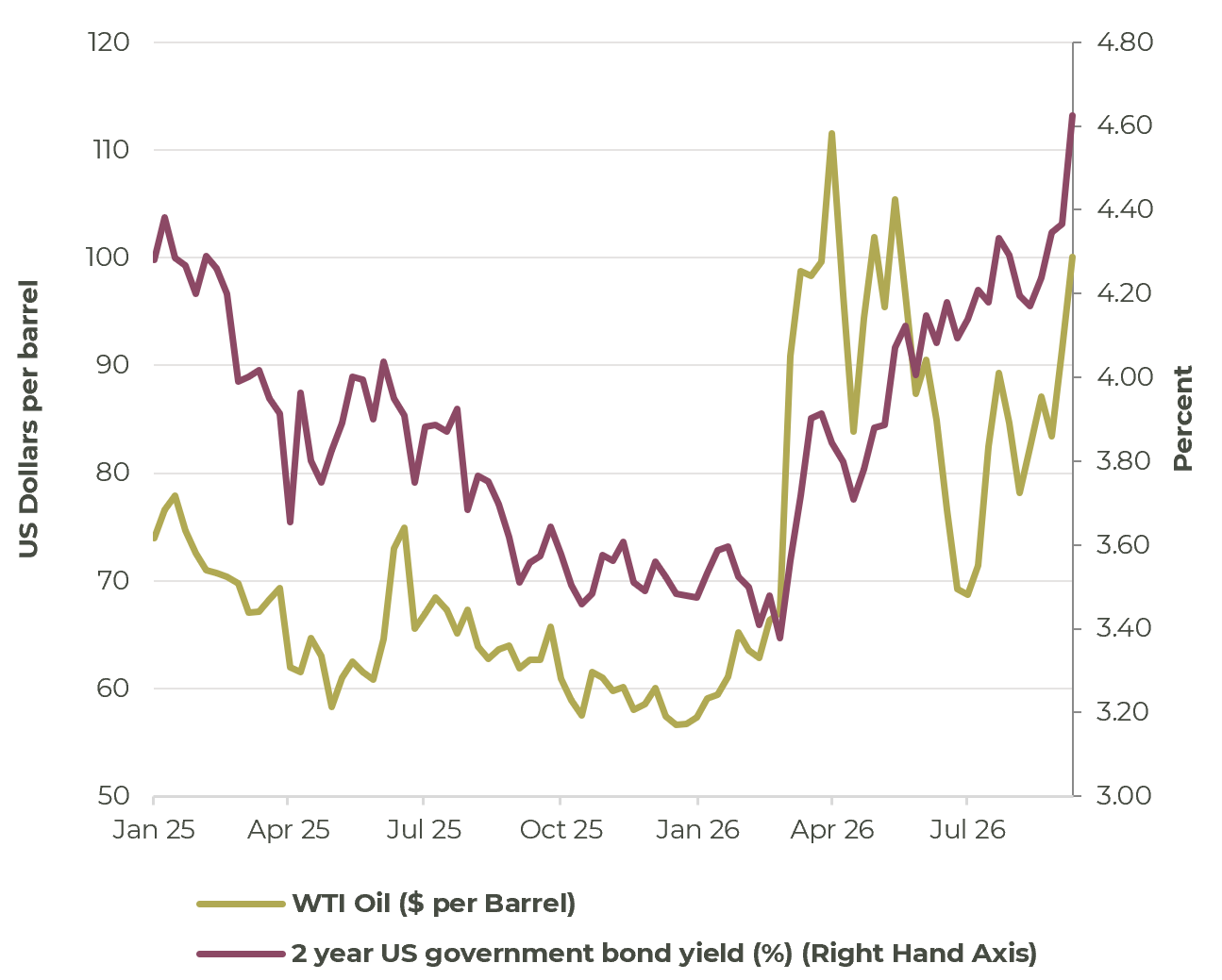
Oil prices have climbed by over $30 per barrel since mid-June. The escalation in the military conflict between the US and Iran has pushed up oil prices in recent days. The Strait of Hormuz appears shut to ships that pre-war would have been responsible for transporting 20% of global oil and natural gas to economies in Asia and Europe.
In addition to the main military action in the Persian Gulf, the Iranian backed Houthi rebel group have recently gained ground in Yemen and have threatened the Saudi Arabian oil supply through the Red Sea (on the opposite side of Saudi Arabia from Iran). This adds a further risk to oil supply for Asian economies and is seen as a contributing factor behind the recent surge in oil prices above $100 per barrel.
The yield on 30-year US Treasury bonds (which moves inversely to price) rose to its highest level in almost 20 years, and 10-year Treasury yields also rose sharply. Most developed-world government bond markets saw similar sell-offs, with UK, German, and Japanese borrowing costs also reaching multi-decade highs.
The chart illustrates the relationship between oil prices and the US 2-year government bond yield. Lower oil prices allowed yields to fall gradually through 2025. This calm backdrop was upended when Israel and the US struck Iran at the end of February 2026. Whilst the ceasefire in April resulted in a drop in oil prices, prices rose again in July as the conflict resumed.
West Texas Intermediate (WTI) oil price has risen back over $100 in recent days on the resumption of the US-Iran conflict, which has pushed bond yields higher.
Source: Bloomberg, Artorius
Inflation
Higher oil prices have reignited concerns among investors and central banks about inflation.
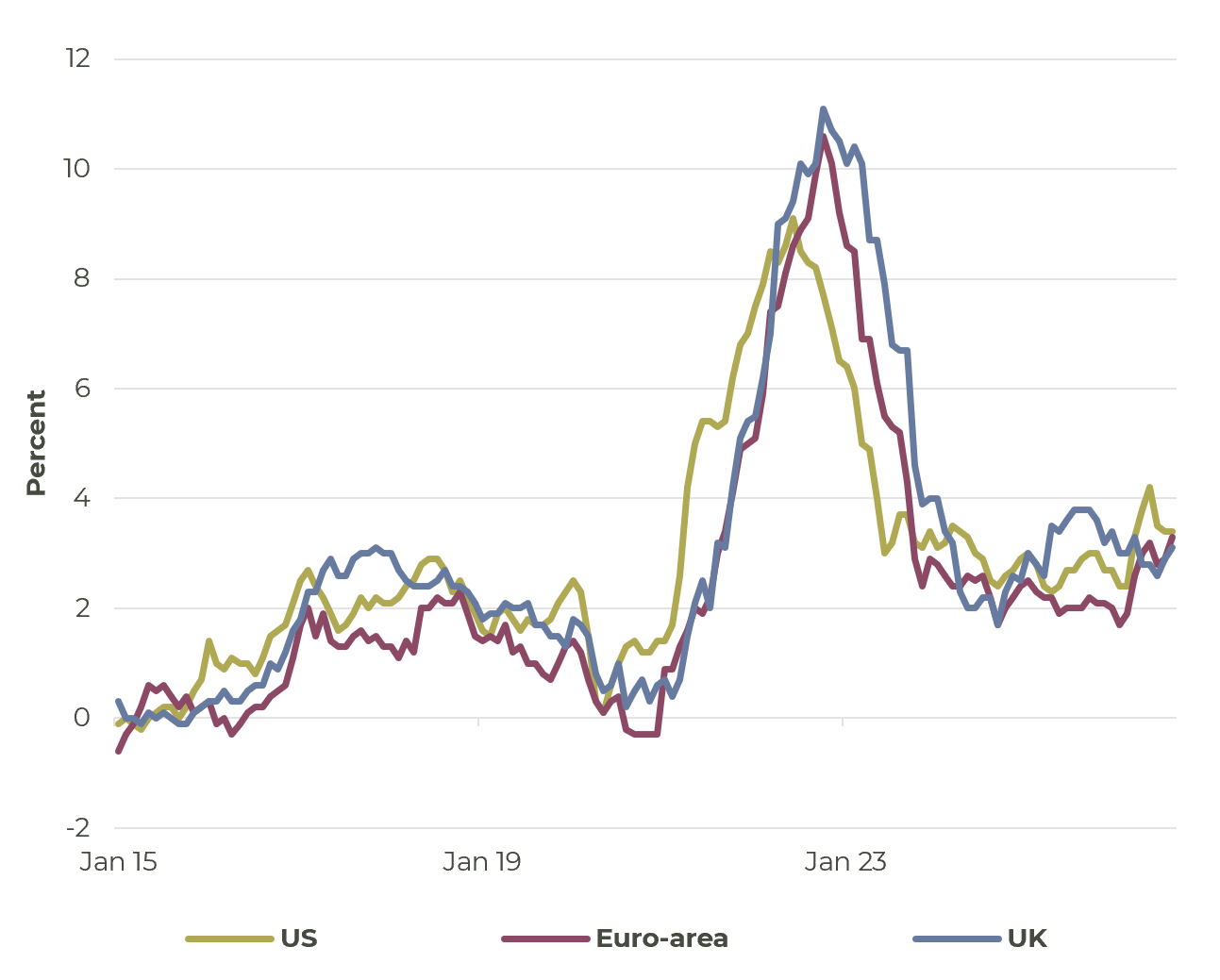
In the UK, inflation remains stubbornly anchored to 3%, whilst in the US inflation has risen from 2.4% in February to 3.5% in August. Euro area inflation has increased from 1.7% in January 2026 to 3.3% in August. Expectations are that the recent surge in oil prices will push inflation higher still in coming months.
Whilst not on the scale of the 2022 inflation surge, the longer inflation remains above target, the harder it may be to bring it back down. Earlier this year, US consumers were partly shielded from the impact of higher oil prices due to a rise in tax refunds. There is no such buffer for consumers in coming months.
In the ‘good-old days’ (pre-Covid), investors and central banks responded to ‘temporary’ oil price spikes by looking through their inflationary effects, helped by the deflationary pressure that China's industrialisation exerted on Western economies. That deflationary release valve is no longer apparent, and inflation has already run too high for too long for central banks to stay relaxed about it this time.
While the inflationary cycles of the 1970s are fading into history, policymakers remain alert to the impact of inflation on real incomes. If prices rise faster than incomes, consumers tend to spend less and the economy slows. The alternative risk is that workers demand higher wages, triggering a wage-price spiral — or, worse, that governments try to cushion the impact of higher energy costs through fiscal giveaways, fuelling further price inflation and higher public debt. The UK in 2022 was an example of this latter scenario. The bond market now appears to be firing warning shots across the bows of any government considering a ‘cost-of-living’ bailout in 2026.
The rise in energy costs is pushing up inflation around the world with inflation uncomfortably above central bank targets.
Source: Bloomberg, Artorius
Interest rate policy response
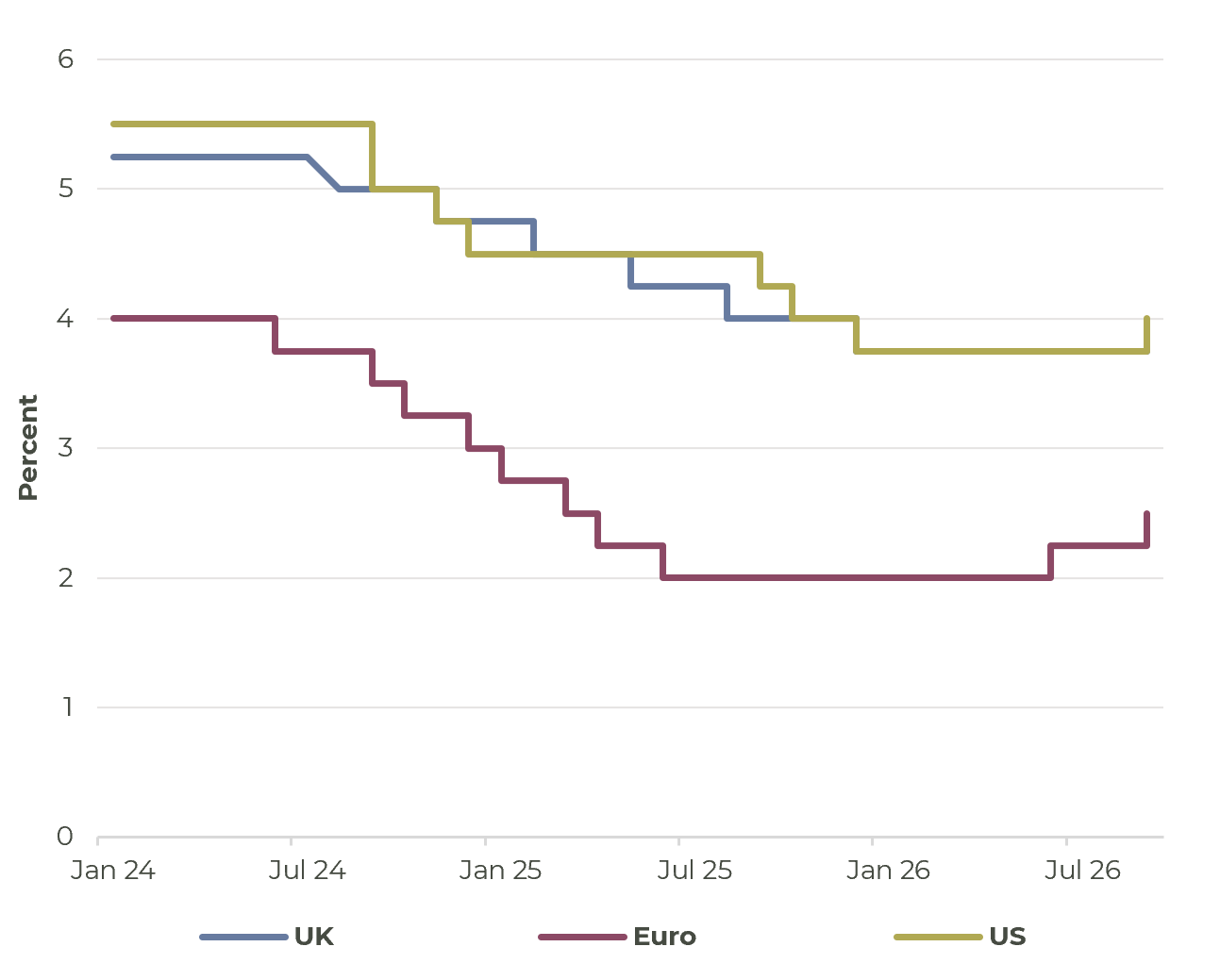
At the start of 2026, investors around the world had anticipated that central banks would cut interest rates through 2026 and into 2027. However, higher energy prices, driven by the US-Israeli attacks on Iran in February 2026, put pay to that. A speech from Federal Reserve Chairman Kevin Warsh in August cemented expectations for a September rate increase of 0.25% taking rates to 3.75-4.00%. The latest US employment report showed the economy adding 162,000 jobs in August, materially above consensus estimates and further evidence that US economic activity remains relatively robust. The US Federal Reserve duly raised rates on 16th September 2026.
The European Central Bank (ECB) raised interest rates in both June and September 2026, taking rates to 2.50%. Christine Lagarde called the hike a ‘no-brainer’ but was at pains to emphasise that the ECB are taking rate decisions meeting by meeting, with nothing certain or decided. Inflation projections for 2027 have increased, but notably, Lagarde also pointed out that growth has been more resilient and inflation more benign than the ECB had anticipated.
In the UK, policymaking is more nuanced. For now, the Bank of England seems content to hold policy rates steady while monitoring incoming data on the second-round effects of higher energy and commodity prices. On 17th September, the Bank adjusted its policy by slowing the pace of bond sales. This policy — selling off the bonds bought during earlier rounds of Quantitative Easing, known as Quantitative Tightening (QT) — has been estimated to have pushed gilt yields higher. Ending QT could therefore help bring bond yields down, easing fiscal constraints on the government ahead of the Budget at the end of October.
UK households are expected to face a 20% increase in winter energy costs as gas prices have risen due to the conflict between Iran and the US. Inflation could well rise to over 4% in 2027, but with moderating wage inflation, it is likely that the UK consumer will see real incomes being squeezed in coming months. Without fiscal support, which the bond market would likely view as unaffordable, UK consumers may face a bleak winter.
Policymakers have responded to higher inflation with higher interest rates in Europe and the US
Source: Bloomberg, Artorius
US midterm elections:
In normal times, US midterm elections are widely commentated on but rarely have a market impact. These do not appear to be normal times, in terms of either politics or politicians. Higher energy costs in the US have suppressed consumer confidence, despite robust US economic growth. Weak consumer confidence appears likely to cost the ruling Republican Party (headed by President Trump) in the November midterm elections.
It seems likely that the Democrats will gain control of the House of Representatives and may even win the Senate. President Trump could therefore find his final two years in office subject to greater checks and balances on his ability to enact policy. Albeit foreign policy (war and diplomacy) tends to remain largely in the hands of the President with limited oversight from Congress.
It is possible that President Trump may choose to escalate tensions with the Democrats to shore up the Republican vote, meaning the coming weeks could bring further political volatility. One such lever he could pull is to step back from military action in the Gulf, which should result in lower oil prices and reduce inflationary pressure.
Good news
Global economic growth continues to outpace forecasts, despite the oil price shock resulting from the Gulf conflict. US economic data shows that factory and service activity remains resilient and is picking up. This may partly reflect the interest rate cuts seen in 2024 and 2025, though the main driver of growth appears to be the surge in technology-related investment spending by US companies. Stronger growth has also been evident in Europe and the UK.
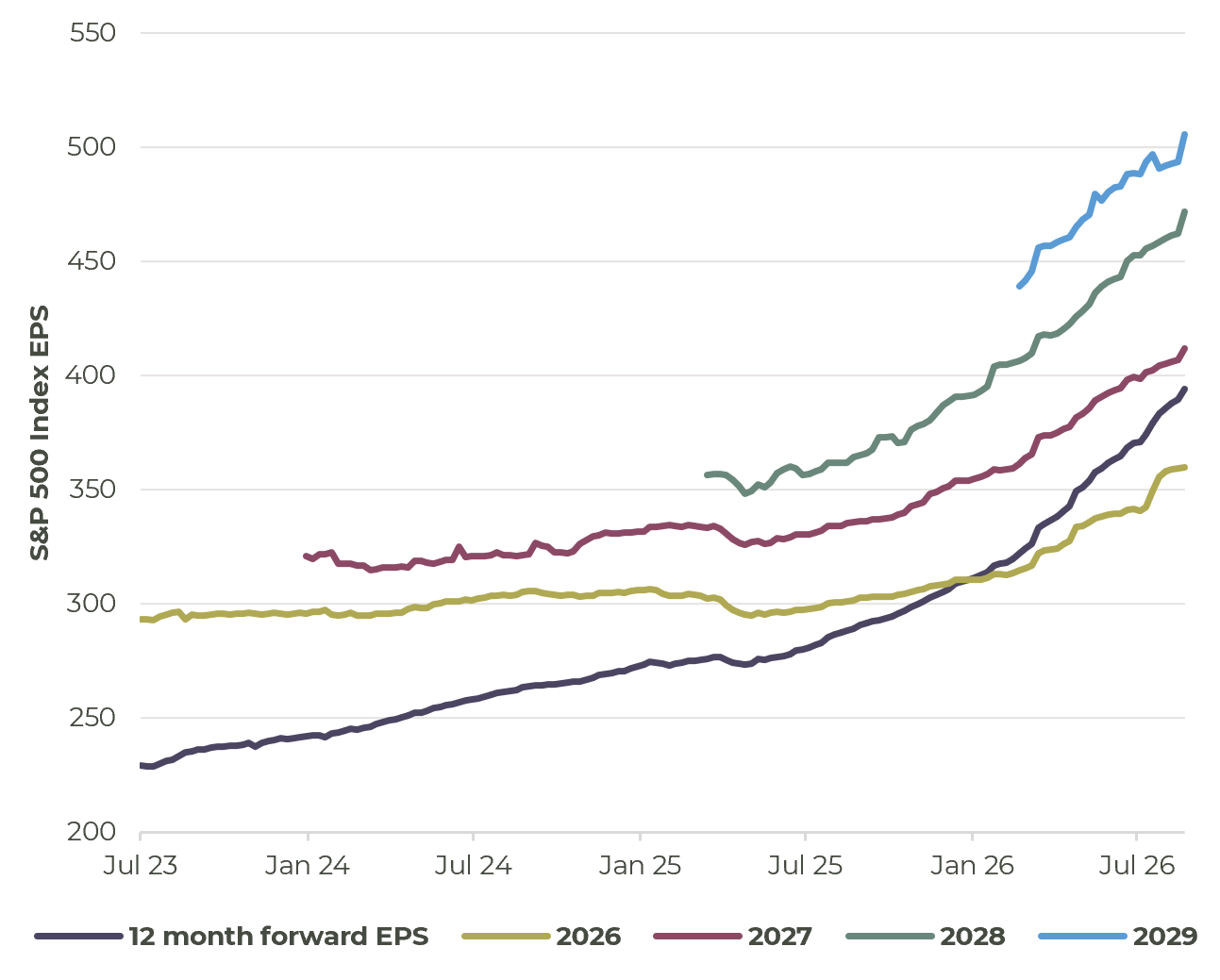
This robust economic backdrop has supported corporate earnings, which continue to beat expectations. Profits are a key driver of investor returns, and in the face of uncertainty stemming from the Gulf conflict, strong earnings have helped insulate equity markets from the damaging effects of oil price volatility and the prospect of higher interest rates.
For now, earnings have been growing so strongly that it’s hard to call the current market a bubble. Bubbles are typically defined by excessive valuations combined with a lack of earnings growth, as was the case in the technology bubble of 1999-2000. During this period equity markets rose even though earnings were being cut and interest rates were rising.
From an investment perspective, the combination of strong earnings and an equity that has traded broadly sideways for a few months means that valuations have become more reasonable. If companies can continue to grow their revenue and profits, which historically they have done outside of recessionary periods, equities are likely to resume their upward path.
S&P 500 earnings per share (EPS) estimates continue to rise as revenues and profits benefit from the strong economy and profit expansion.
Conclusion

The escalating conflict with Iran has pushed oil prices above $100 per barrel and raised inflation expectations, prompting markets to reassess both the inflation outlook and the likely path of interest rates. This has resulted in a backdrop where equities have struggled over the past few months despite strong profits growth.
The European Central Bank raised rates twice over the summer, and the US Federal Reserve raised rates on September 16th. Both banks had previously been expected to cut rates in 2026, but the US-Israeli strikes on Iran and the resulting rise in oil prices reversed those expectations. This shift has pushed bond yields higher. Higher yields make borrowing more expensive for governments and companies and, historically, result in slower economic growth in the following months.
So far in 2026, economic growth has held up well in the US, UK, and Europe. However, higher energy costs and rising borrowing costs are likely to slow the pace of growth somewhat going forward.
The US faces a bout of election fever as the midterms take place in November. The high oil price and resultant drop in US consumer confidence bode ill for the ruling Republican (Trump’s) party and the Democrats are likely to win the House of Representatives, while the Senate race is much closer. There is a risk that Trump's policy announcements become more unpredictable as he tries to boost Republican prospects ahead of November.
Profits have risen faster than equity prices in 2026, resulting in markets that look cheaper (lower valuations) than they did at the start of the year despite share prices rising. The combination of a cheapening stock market alongside rising prices suggests some level of investor scepticism about the sustainability of the AI investment cycle.
*Any feedback provided can be anonymous
Important Information
Artorius provides this document in good faith and for information purposes only. All expressions of opinion reflect the judgment of Artorius at 18th September 2026 and are subject to change, without notice. Information has been obtained from sources considered reliable, but we do not guarantee that the foregoing report is accurate or complete; we do not accept any liability for any errors or omissions, nor for any actions taken based on its content.
The value of an investment and the income from it could go down as well as up. The return at the end of the investment period is not guaranteed and you may get back less than you originally invested. Past performance is not a reliable indicator of future results.
Nothing in this document is intended to be, or should be construed as, regulated advice. Reliance should not be placed on the information contained within this document when taking individual investment or strategic decisions.
Any advisory services we provide will be subject to a formal Engagement Letter signed by both parties. Any Investment Management services we provide will be subject to a formal Investment Management Agreement, which will include an agreed mandate.
Artorius Wealth Management Limited is authorised and regulated by the Financial Conduct Authority. Artorius is a trading name of Artorius Wealth Management Limited.
FP20260918001